Friday, 27 May 2016

Creating resources to support personalised learning
Creating a new site to support differentiated spelling based on joy Alcocks Spelling Under Scrutiny
https://sites.google.com/a/takanini.school.nz/spelling-takanini/
https://sites.google.com/a/takanini.school.nz/spelling-takanini/
Wednesday, 25 May 2016
VPLD Hui 2016
The power of the VPLD as a community
- Unique journeys with common challenges
- Reflection
- critical conversations
- Relational trust
- support
- Theme of change
- Judgement free
- network and connecting
- External to your working context
- professional knowledge sharing
How can this community move forward together in times of change to pld provision
Thursday, 21 April 2016
Day off??
1st day off..kind of..created 3 link plans and 37 DLO's so farhttps://t.co/Aqy60fMlOB https://t.co/9BHdXbvrFc @nzmaths I'm upgrading you:)— Joanna Wheway (@jojoestudiant) April 22, 2016
Saturday, 9 April 2016
2016 what happened to term 1?!
This is my first entry on this blog for 2016..it seems crazy to say this..but there have just not been enough hours in the day! I am considering making a case for why we need a day extended out to include 30 hours...just not sure who I write to about this!
in stopping for a minute to think about life, the universe and everything education...I am reflecting on challenges I am encountering so far this year...the question being which one to reflect on first!
My choice to move schools... from a school that was finally in a good place after a few years of struggle...to a school on a 1 yr ero review with an LSM and a huge amount of challenges... seemed rational as a decision. I still believe it is a rational choice ( though there are the odd moments when I wake up wondering when they will come for me with the little white van and those special jackets with arms that tie at the back!!) however it is a choice that has now generated hundreds of other choices that need to be solved- from creating a school curriculum to raising PCK in our teachers and dealing with daily life for our students.
How to tackle those choices and how to ensure that within the daily craziness of life that we are staying focused on the big picture? This is seemingly simple, yet so amazingly complex when you stop to look more closely.
So my aim this year when blogging is to try and keep myself focused on the big picture- again this may be challenging as every stakeholder has a different lens on the big picture.
! As a leadership team we are focused on the strategic goals and how to implement these so we achieve our targets. ERO are focused on student achievement ( and rightly so- it is very possibly the worst in NZ) however they don't see the implications that are inherent in focusing on achievement when many of our learners have been so failed by the school that they aren't 'school ready'- they have no language for themselves as learners and building this language takes time...we know it will be what raises achievement..but will it do so fast enough for ERO? Parents and our community are focused on the whole child, socially, emotionally and academically- with the biggest issue for them being regaining trust with a school that has let them down for so long and without this trust we can't forge strong home school partnerships that are focused on learning. then we have what is essentially a brand new staff ( 17 of the 20 teachers are brand new to the school) again relational trust is a huge influence on supporting these teachers- until we have trust we can't engage in open to learning conversations and without that we can't raise PCK and move forward to address achievement through effective classroom programmes. On top of PCK raising for staff we have thrown them into the deep end by going 1:1 for all year 5-8 students- exciting and with all the inherent possibilities for personalisation and differentiation of learning- but a pedagogical nightmare for some of our teachers that requires huge levels of support.
Finally we have our beautiful students- so desperate to learn and like there parents for many the school has failed and disengaged them, so we need to build relationships with a new shared language for learning at our school that all our learners can own.
so having worked out the challenges we now need to work out what we will do to address them- as a leadership team we took various areas and have put them into a continuum marked out of 10- this was our way of looking at all the areas we have to shift and then reflecting on where we are ( given that 10 would be a highly functioning school) and working out what tiny step will take us to the next point on the continuum. This is proving really great as a stop and evaluate tool that we use on a weekly basis with formal evaluation every few weeks.
an example of a few of the aspects we evaluate on our continuum are
Planning
8/3
| |||||||||
30/3
|
8/3
To get to 6 we need to:
- link in the assessment for learning data,
- differentiate and link this to specific LI/ SC so the LI matches the task
30/3
A closer and sustained analysis through weekly feedback by SLT/MLT showed that a 6 was overly optimistic. We need to work with teams more on how to link data with groupings, texts and LI and SC’s.
To get to a 5 we need to
- Co-plan using TKI reading teacher notes & CSI to scaffold appropriate reading lesson structure and LI and SC (These meetings are scheduled throughout the end of term 1 and the first half of term 2).
- Evidence visible in modelling books (what is actually happening in teaching sessions matches what is in the planning) Lit team tracking
- students able to talk about their learning and whether they are being successful as evidence of triangulation between planning, learning and student ownership. SLT-to ask every students
Pedagogy
8/3
| |||||||||
30/3
|
8/3
To move to a 3 we need to:
- Support teachers to get guided reading into place
- Ensure all teachers are able to administer assessment tools in reading
- Support teachers to make links between reading PLD and writing
30/3
We have made progress with guided reading in place in all classes but need to align assessment data with planning and teaching. Making links between reading PLD and writing is not happening.
To move to a 3 or 4 we need to:
- Put in place a supported model for planning guided reading with teachers
- Have all teachers meeting the expectation for elearning occurring in reading, writing and maths
- Encourage teachers to tap into student voice to make programmes more engaging
- A one pager of what a reading lesson should look like
Elearning
L/C/S pedagogy
Basic skills need to become routine in Y5-Y8 classes
8/3
| ||||||||||
30/3
| ||||||||||
8/3
Progress made:
- Teachers using teacher dashboard to support learners with renaming/filing work
- Some teachers creating differentiated reading digital learning objects (DLOs) for learners that support specific learning intentions (building the create/show what you know culture)
- Most 1:1 classes are using Class Google Sites for students to access learning (digital-home)
- Y4 using pods of Chromebooks since Wk 8 T1 (using Class site - Reading Hub)
30/3
To move forward we need to:
- Continued modelling and co-teaching in class to build eLearning capabilities in teachers (e.g. CyberSmart lessons, Reading, Writing, Maths)
- Further work with teachers using Class sites as a hub for students to access target resources
- Providing feedback/next steps via commenting - all 1:1 teachers
- Support Y1-4 with iPads - using Explain Everything to develop targeted resources and capture student voice
- Class blogs for teachers ready to take that next step in making learning visible (and connecting with whanau in an authentic setting)
- Learn/Create/Share pedagogy introduced across the school
Tuesday, 17 November 2015
ELN 2015
Reflecting on the journey during 2015 with the Eastern Learning Network with the focus on teachers as inquirers.
As a cluster of schools there has been a big focus on how to engage effectively with teaching as inquiry- from a teacher perspective and as a leadership. Through the year there has been facilitators from AUT supporting and guiding thinking, along with Maggie Ogram.
towards the end of term 3 a survey was constructed, with the input from leaders and teachers from the participating schools. This survey was then created and put out to the teachers and leaders from the schools in order to gather data around MLP and the development of this and also teaching as inquiry.
In term 4 the facilitators from AUT collated and analysed the data to give feedback to our schools that help us to see where we are and what gaps we have. This has given us the information we need as a cluster and as individual schools in order to align our resourcing and PLD in order to build these areas on into 2016.
Of all the areas of data there are some that are not surprising, for example -time- an ongoing battle for all schools to provide their teachers with enough time to engage in pld that impacts positively with their practice.
And some that are areas that either fall above or below the predicted levels given our school's journey and where we are on that journey. For example, the extent to which the collaborative inquiry has enhanced collaboration and capacity to reflect is high and the happiness with their appraisal process is lower than is being espoused within the school grounds.


Wednesday, 4 November 2015
New Entrant ownership of learning
so proud of our new entrant classes they have only been at school for a tiny amount of time yet they are already able to take ownership of their learning
This week marks 10 weeks at school for some and they selected a perfect goal to work on for their writing. who says that young children can't own their own learning!
they also love to use show me to talk about their maths learning and easy blogger to share...though I may actually have to set some rules about what they can video and share with this tool!!
room 1 are amazing- check them out:)
Monday, 26 October 2015
PLG Working hard on the seven traits of sustainable leadership
Had a great session last week on what we do and want to do aligned with the 7 traits of leadership that is sustainable
created a great info graphic to represent our collaborative thoughts
http://www.ospreyconsulting.co.nz/
created a great info graphic to represent our collaborative thoughts
http://www.ospreyconsulting.co.nz/
sharing our professional inquiries
Teachers only day today and we kicked off with getting into break out groups and sharing our teaching as inquiry cycles for 2015
it was such a beneficial experience to be able to sit together and share our adaptations to our practice...I am hugely proud of the teachers at MBS and the community of learners we have become
Check out our inquires on our MBS professional learning blog

Monday, 28 September 2015
Saturday, 26 September 2015
Connected Educator 2015
i am being brave and have put my name down to host an event on the 30th September..wonder if I will remember what I was going to say...or will nerves make me sink into waffle!
The event is live at 2:25pm on Tuesday 30th September from this calendar link.

The event is live at 2:25pm on Tuesday 30th September from this calendar link.
Wednesday, 29 July 2015
Plg- what is collaboration ?
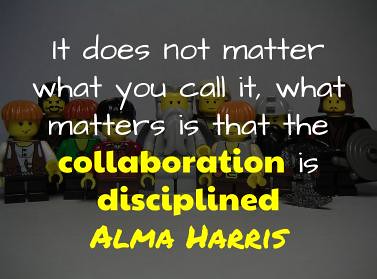
Alma Harris Disciplined collaboration
The concepts that are delved into are very similar to many other researchers findings I have read and also the day spent recently with Roween Higgie at the EAAPA leadership day Leading from within
The 3 key ideas are
Implementation
Innovation
Impact

7 tests
Clarity of focus
Consistent and creative use of data
Collaboration with purpose
Communication of intent and outcomes
Capacity building through engagement and involvement of others
Coherent action
Change in practice
Distributed Leadership
Distributed Leadership
Monday, 20 July 2015
Creating learner agency in New Entrants
Day one with a new entrant class and we set some writing goals
this is part of our junior school inquiry into increasing student ownership and agency over their writing goals...an area I had seen as a problem for our younger students to articulate during snapshots of student voice earlier this year
Every teacher in the junior school has taken our kid speak writing goal and are trying different ways to increase ownership of their learning needs with their classes.
I have taken the kid speak goals and added visuals to each goal
In the first year writing goals
I have paired this with our MBS writing process that I posted about last year
Mbs writing process
and today with week 1 new entrants we spent a lot of time looking at their first goal
Room 1 setting writing goals
It will be exciting to see how this increases ownership and agency of their own learning needs

Juggling time
I have posted before about how hard it is to fit in everything I need to do during a normal ( is there any such thing!) teaching day.
As of this term I am in a classroom 4 days a week with 1 day a week to fit in everything else that I do for my role as AP/ elearning leader/ Maths leader/ SENCO.
It must be said that during this holidays I have alternated between excitement to be spending more time teaching and worrying how to manage everything I need to do.
Today was the first day of one of my teaching roles..a class of new entrants. I have spent the past week getting ready with the teacher who will do 0.6 and I was excited to implement the amazing things we had set up. Getting to school early to allow me to finalise all the prep for todays lessons ( couldn't fit everything in last week despite spending every day in school) I was met by a server room with no power...Now luckily I work for someone with a brain who has employed a full time ICT support company...but they don't live on site...so the problem still remained that I had to get this fixed ASAP otherwise the teachers would not be happy bunnies. I eventually found the issue and handed it over to the IT contract guy to fix remotely. However this took the hour I had allowed before school to get set up...which then meant running behind all day trying to get resourced for the next section of the day.
Toughen up..is what I usually say to myself in situations like this...but I am not sure how much tougher I can be and I absolutely dislike not performing to the best of my abilities...especially when it comes to being in class...The lessons went well and we achieved all I set out...and more..but the only way to ensure this was to not stp all day and to run like mad during my breaks. I know feel like I have been back at school for a week already..which I know isn't good for me or my family.
So how to juggle is my big question to myself...How will I manage to ensure that everything I need to do is done to my rather exacting standards?
still the staff meeting I ran after school on elearning went well and so did the class programme...could be I am worrying before the horse has even bolted...guess we will see.
Monday, 15 June 2015
Leading from within
Day away from craziness of daily work focusing on leading change from within, facilitated by the awesome Roween higgie from education group... So I know there will be lots to think about.


 This is about self awareness- my feelings, thoughts, actions. Knowing how people respond to this, then being able to manage this. For instance a couple of weeks ago I was feeling very stressed, I knew this and I knew it couldn't get out as my team need me to be strong for them...so I made sure to stay calm and keep my mouth shut if I was feeling a bit off so I wouldn't reveal impatience....this ended up being futile as my team knew instantly that I was not ok...as my quietness gave me away...since this I have been pondering how to handle the fact that if I seem off it freaks my team out...yet I'm still human
 Responsive leaders are reflective continual, adaptive leaders. On this aspect I am always pushing the edge of research and seeking ideas that have a high proven impact that will enhance and support our students to achieve
 The multiplier leader has influence. If we as leaders are influencers we are at the wave leading the change. Then there are people climbing the wave. They want to make the pedagogical shift, they believe and they are trying. Then there is the people who are under the wave or even in a tree at the side who really do not want to do this...the naysayers. Our role as leaders is to know how and when to use our influence..or that of others in order to help everyone to get up the wave...providing the wave is going in a direction that has been agreed on as a place we wish to go as we believe in it for our learners


Use either of these frameworks to use as a frame to address issues


A norm is a custom, a rule, a pattern or a habit of a team

Competences for leaders
Centre for creative leadership calls our role "middle leaders- we operate up and down the organisational hierarchy, as well as across functions and silos. To achieve results we must effectively manage people and processes "
http://www.ccl.org/leadership/CCLSearchResults.aspx?q=educational%20leadership%20research#gsc.tab=0&gsc.q=educational%20leadership%20research&gsc.page=1
Our leadership roles are highly complex
Who are the senior/ middle leaders in our school?
Principal, DP and AP form the SLT
DP and AP have teams of teachers they work closely with to support.
Specifically within my team structure I believe that we have a strong PLCommunity which supports , extends and pushes each other.
What are similarities and differences between the two?
Our school is very small so the amount of middle leaders is small on paper. But in practice we have experts who step up and share and support each other
Our definition of a middle leader is ?
Leadership that gets results by dan goleman
http://www.slideshare.net/mobile/BagusWahyudi/leadership-that-get-result
I currently utilise affiliative, democratic and coaching most naturally. Authoritative is an area I am trying to build on in my leadership and pacesetting is something I have previously has to work on in order to ensure I don't run ahead
Authoritative leaders are clear about the bigger picture, stand firm in face of challenge but these leaders need to ensure they have people on the bus
Coercive leadership is appropriate when there is a process and accountability to be complied with- this is not the time to ask if people want to do things a different way.
Democratic gets buy in
Coaching helps change
Affiliative keeps everyone working in the same direction and keeps the passion running
Pacesetting can be positive or negative
Jan hill - leadership competencies
This is about self awareness- my feelings, thoughts, actions. Knowing how people respond to this, then being able to manage this. For instance a couple of weeks ago I was feeling very stressed, I knew this and I knew it couldn't get out as my team need me to be strong for them...so I made sure to stay calm and keep my mouth shut if I was feeling a bit off so I wouldn't reveal impatience....this ended up being futile as my team knew instantly that I was not ok...as my quietness gave me away...since this I have been pondering how to handle the fact that if I seem off it freaks my team out...yet I'm still human Social competence is about how well I know and can facilitate the supports around my team to be there for them and know when each person may need support and what is the best way to offer this support
Relationships are fundamental to a string healthy school. Our role as middle leaders is to build these relationships, which can be very complex
Responsive leaders are reflective continual, adaptive leaders. On this aspect I am always pushing the edge of research and seeking ideas that have a high proven impact that will enhance and support our students to achieveWe have to be good at evaluating new ideas and research to our context and seeing how this might impact and be integrated into our school.
The multiplier leader has influence. If we as leaders are influencers we are at the wave leading the change. Then there are people climbing the wave. They want to make the pedagogical shift, they believe and they are trying. Then there is the people who are under the wave or even in a tree at the side who really do not want to do this...the naysayers. Our role as leaders is to know how and when to use our influence..or that of others in order to help everyone to get up the wave...providing the wave is going in a direction that has been agreed on as a place we wish to go as we believe in it for our learnersIn my practice as a leader this year I am working lots within how I use my influence and adapt this to people at such varying points on the wave.
Timperley says there are 3 key ways to create dissonance...which is the trigger for change
Theory...use research to prompt challenge to thinking
Alternative practice...observing others who are doing this already
Data...data is no negotiable....it is a blunt trigger for a conversation
Taking a stand
Managers do things right and leaders do the right thing...having a moral compass
But this can be very difficult to align with how others perceive the same issue...so as leaders we need to do double checks on our thinking around these issues...go to the code of ethics...check with fellow leader to ensure we have our thinking around a situation...and always make sure we have evidence to support our thinking on an issue
Using a coaching model to see how we could extend our ability to take a stand
Resilience
What skills, knowledge, and habits do it have to support this?
What can I let go off that is holding this back?
How can I use my and other peoples talents more effectively?
Resilience as a leader, teachers, person?
Thinking and acting systematically
Whenever we think of a change, how we think and act is important
Seeing the big picture
Adapting to meet needs
Being a systems player and maker in terms of generating systems
Carrying out review
Giving up the need to constantly please
During review how methodical are we, do we create dissonance around it? In numeracy review it is being very methodical...looking at what we have in place, what works, what doesn't and what innovations we have that are showing good data
Look at the work 'the principal' by Michael full an
You look at how to seed a germ in your school:) the germ takes and spreads
Facilitation
What we do in our roles as leaders is either directive or self directive
The key to success is the building of self directed learning skills in our teachers
Ask the right question
Build capability and evaluative skills in our teachers
Fronting issues is a key part of this role of facilitator...using a range of tools to front issues as they come along
Desc script
Describe, effect, specify, consequences
DQAP
Describe, question, articulate, problem solve
With either of these
Ask permission to talk first, make sure you have the time for the conversation, be careful of body language and tone of voice, don't make assumptions or blame
These conversations are not about blame but rather about change
Use a solutions focused approach to timing issues so people take control
Rowen calls this flipping
Instead of totally empty sympathy
Flip the negative conversation into a positive e.g how would you feel tomorrow if you could tick of some of these
Then ensure you use their words in the conversations
Thinking about all the competencies, choose one you feel you need to work on first
Facilitation is the one that aligns with one of my goals for this year and is an area I struggle with sometimes. I need to use the DQAP frame and pre script for addressing certain issues in the school
A leaders role in team development
The leadership experience, Richard daft 2001
Forming
Storming
Norming
Performing
Positive norms
Ask questions that challenge and promote discussion ( strictly data and achievement focused).
Support each other
Share and build our expertise and capabilities
High trust that allow us to be more open to growth
Fun and work together
Negative norms
Quieter members not actively encouraged to participate in team, more dominant voices occasionally carried away
When tired sometimes edge towards blame which is negative
Two small steps I can take to strengthen or change one of these norms ?
Characteristic of an effective team
The team is clear about what it wants to achieve- student achievement is central focus
Ground rules are established for how the group works together- clear expectations for how we will all work together
Job descriptions, roles should be up to date and transparent
Trus or personal trustworthiness?
Onora oneill ted talk https://www.ted.com/talks/onora_o_neill_what_we_don_t_understand_about_trust?language=en
We can't make people trust us we have to focus on building our own personal trustworthiness
Honesty
Transparency
Reliability
Competence
As a leader I need to ensure I am addressing issues for team members in a fair way that builds trust
Tuesday, 9 June 2015
ELN collaboration
Problem solving is the most highly rated skill required in the job market


How are we creating this and other skills to support our students as they progress towards their future careers
How are we using technology?
Diversity of teaching strategies
Multiple opportunities to learn , practice and apply
Student centric learning- ownership and agency
Peer learning is optimised through devices as this has the greatest effect size
Opportunities for feedback are maximised
Digital behaviours
Is the learning making students passive recipients
Or are the tasks rich creation based tasks
What does each of these look like- put ideas as a staff
Interacting-
Meandering- looking but not really purposeful.
Distributing - sharing work via Google docs
Transacting-
Researching- Google research tools and search terms . Copyright and plagerism
Filtering the gold from the dross!
What do we use most?
In my daily life I probay most use distributing, researching, creating, interacting and transacting
In my classroom I lean heavily towards creation, transacting, researching,
In the junior school there is a reluctance to use some of these tools.
I need to work out how I can support teachers to become braver
The getting ideas for how to use these us maybe the biggest
Thursday, 4 June 2015
Teacher Talk
Look at the teacher talk frame and come back with ideas for how this can support what we can use it for to improve our leadership practice?
Monday, 1 June 2015
Determinants of relational trust
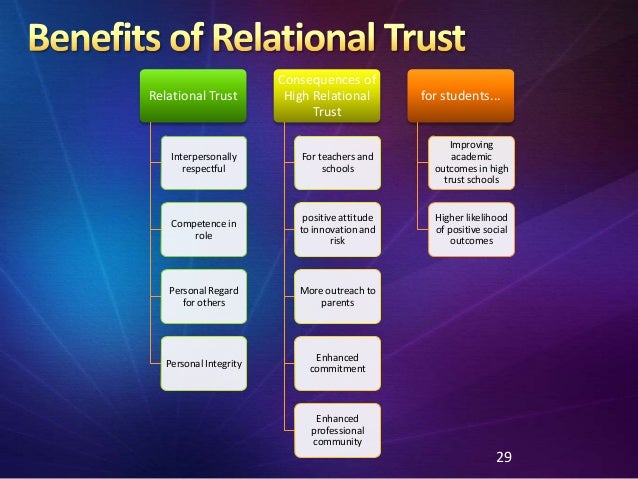
Taking the personal out of the conversation so that all conversations are based around the data
Entails asking open to learning conversations
SLT building a shared understanding of who we are as an slt team
Looking at the various models of leadership
http://knowledgeleadershipnz.com/schooling-improvement-models-2/
Taking the effective pedagogy pages of NZC and replace the words students with 'teachers and teachers with 'leaders'
http://knowledgeleadershipnz.com/schooling-improvement-models-2/
Taking the effective pedagogy pages of NZC and replace the words students with 'teachers and teachers with 'leaders'
Subscribe to:
Posts (Atom)